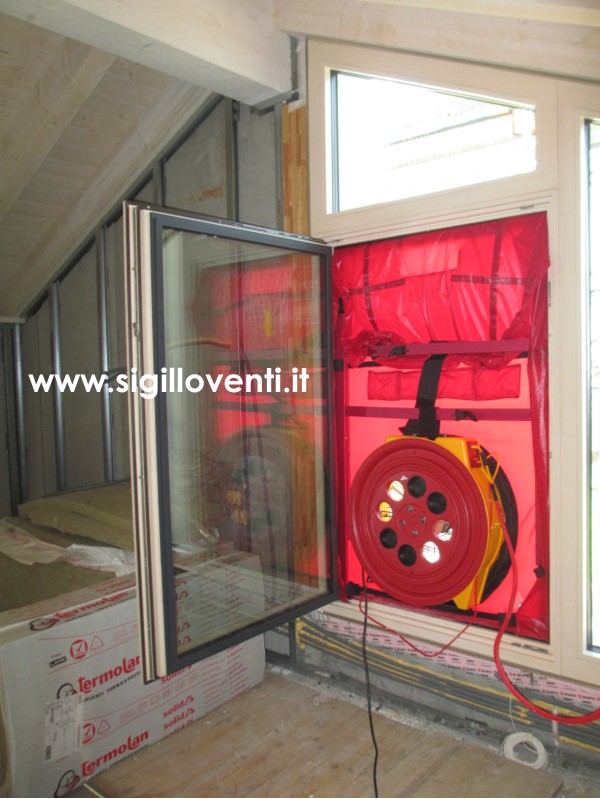
Per eseguire correttamente un blower door test è necessario: chiudere tutte le finestre e porte esterne, sigillare bocchette VMC, aprire le porte interne, installare un ventilatore calibrato in una porta/finestra, creare una differenza di pressione di 50 Pascal e misurare il flusso d'aria necessario a mantenerla. Il test dura 2-4 ore e richiede attrezzatura certificata EN 13829. Il blower door test è una prova fondamentale per verificare la tenuta all'aria degli edifici e identificare le infiltrazioni che compromettono l'efficienza energetica, permettendo di misurare con precisione le dispersioni termiche e garantire il comfort abitativo.
Cos'è il Blower Door Test
Il blower door test è una procedura diagnostica che utilizza un ventilatore calibrato installato temporaneamente in una porta dell'edificio. Secondo
ENEA, le infiltrazioni possono causare dispersioni fino al 40%.
La prova di tenuta all'aria è obbligatoria per edifici in classe energetica A e superiori, secondo il D.M. 26 giugno 2015 (Requisiti Minimi). Questa certificazione è essenziale non solo per la conformità normativa, ma anche per garantire un'efficienza energetica reale e misurabile.
Quando è Necessario Eseguire il Blower Door Test
Il test di tenuta all'aria è richiesto in diversi contesti:
- Nuove costruzioni in classe energetica A o superiore
- Edifici certificati Passivhaus o CasaClima
- Ristrutturazioni importanti con sostituzione dell'involucro
- Diagnosi energetiche per identificare perdite
- Verifica pre-consegna per costruttori
Secondo
CasaClima, il valore limite per edifici ad alta efficienza è di 0,6 ricambi d'aria all'ora (n50 ≤ 0,6 h-1), mentre per edifici passivi
Passivhaus Institut richiede n50 ≤ 0,6 h-1.
Come Eseguire il Blower Door Test: Procedura Step-by-Step
Eseguire correttamente un blower door test richiede preparazione accurata e attrezzatura certificata. Ecco i passaggi fondamentali:
1. Preparazione dell'Edificio
Prima del test, è necessario:
- Chiudere tutte le finestre e le porte esterne
- Sigillare temporaneamente bocchette VMC e cappe aspiranti
- Aprire tutte le porte interne per creare un volume unico
- Verificare che non ci siano combustioni in corso (stufe, caldaie)
- Documentare lo stato dell'edificio con foto
2. Installazione dell'Attrezzatura
Il ventilatore calibrato (blower door fan) viene installato in un telaio regolabile montato su una porta o finestra esterna. L'attrezzatura deve essere certificata secondo EN 13829 e comprendere:
- Ventilatore con portate variabili
- Manometri digitali per misurare la differenza di pressione
- Telaio telescopico con telo impermeabile
- Sistema di acquisizione dati
3. Esecuzione delle Misure
Il test viene eseguito in due modalità secondo la norma UNI EN 13829:
**Metodo A (Building-in-use):** Configurazione normale dell'edificio con bocchette e camini aperti.
**Metodo B (Building-envelope):** Configurazione con tutte le aperture intenzionali sigillate, per testare solo l'involucro edilizio.
Il ventilatore crea una differenza di pressione di 50 Pascal tra interno ed esterno, misurando il flusso d'aria necessario a mantenerla. Questo valore (n50) indica i ricambi d'aria all'ora a 50 Pa.
4. Ricerca delle Infiltrazioni
Durante il test in depressione, è possibile individuare i punti di perdita utilizzando:
- Termocamera a infrarossi per visualizzare flussi d'aria fredda
- Anemometri per misurare velocità dell'aria
- Generatori di fumo per rendere visibili le correnti
- Ispezione visiva e tattile dei giunti critici
I punti più comuni di infiltrazione sono:
- Giunti tra serramento e muratura
- Cassettoni delle tapparelle
- Passaggi impiantistici (tubi, cavi)
- Travi a sbalzo e pilastri in facciata
- Giunti tra pareti e solai
Per approfondire le cause e le soluzioni relative alle infiltrazioni d'aria, consulta la nostra guida su
come individuare ed eliminare gli spifferi e scopri come g
arantire la tenuta all'aria dell'involucro edilizio.
5. Interpretazione dei Risultati
I risultati vengono espressi con l'indice n50 (ricambi d'aria all'ora a 50 Pa):
- **n50 > 3,0 h-1:** Tenuta insufficiente, edificio tradizionale
- **n50 = 1,0-3,0 h-1:** Tenuta accettabile per edifici standard
- **n50 = 0,6-1,0 h-1:** Buona tenuta, edifici ad alta efficienza
- **n50 < 0,6 h-1:** Ottima tenuta, standard Passivhaus
Il certificato rilasciato include il rapporto completo con grafici pressione/flusso, foto delle infiltrazioni e raccomandazioni di intervento.
Costi e Tempistiche del Blower Door Test
Il costo di un blower door test professionale varia in base alle dimensioni dell'edificio:
- Appartamento (50-100 mq): 400-600 euro
- Villa singola (150-250 mq): 600-900 euro
- Edificio plurifamiliare: 800-1500 euro
Il test completo richiede circa 2-4 ore, inclusa preparazione, misure e rilascio del certificato. Il rapporto finale viene consegnato entro 7 giorni lavorativi.
Perché Affidarsi a Professionisti Certificati
Eseguire correttamente un blower door test richiede competenza tecnica e strumentazione certificata. Un tecnico qualificato garantisce:
- Attrezzatura calibrata secondo normativa EN 13829
- Corretta interpretazione dei risultati
- Individuazione precisa delle criticità
- Certificazione valida per pratiche edilizie
- Consulenza per interventi correttivi
I nostri tecnici sono certificati e utilizzano strumentazione professionale conforme agli standard CasaClima e Passivhaus Institut. Operiamo su tutto il territorio nazionale con rapporti dettagliati e supporto post-test.
Domande Frequenti sul Blower Door Test
**Quanto dura un blower door test?**
Il test completo richiede 2-4 ore per edifici residenziali, includendo preparazione, misurazioni e individuazione perdite. Il certificato viene rilasciato entro 7 giorni.
**Il test è obbligatorio per tutti gli edifici?**
È obbligatorio per edifici nuovi in classe energetica A o superiore secondo il D.M. 26/06/2015. È volontario ma consigliato per ristrutturazioni e diagnosi energetiche.
**Quando va eseguito il blower door test?**
Idealmente in due momenti: a fine lavori (pre-cartongesso) per individuare criticità correggibili, e a completamento edificio per la certificazione finale.
**Cosa succede se l'edificio non supera il test?**
Il tecnico identifica i punti di infiltrazione e suggerisce interventi correttivi. Dopo le correzioni, si ripete il test per la certificazione.
**Il test può danneggiare l'edificio?**
No, la differenza di pressione di 50 Pa è equivalente a un vento moderato e non causa danni strutturali o agli impianti.
Correlati